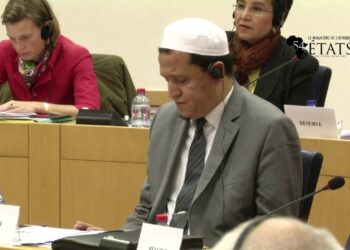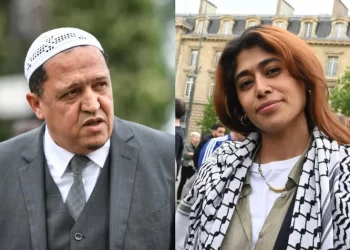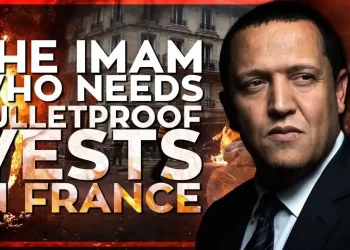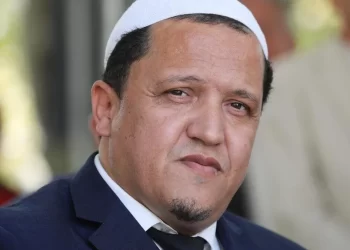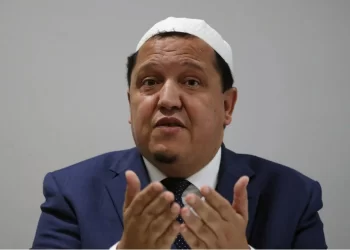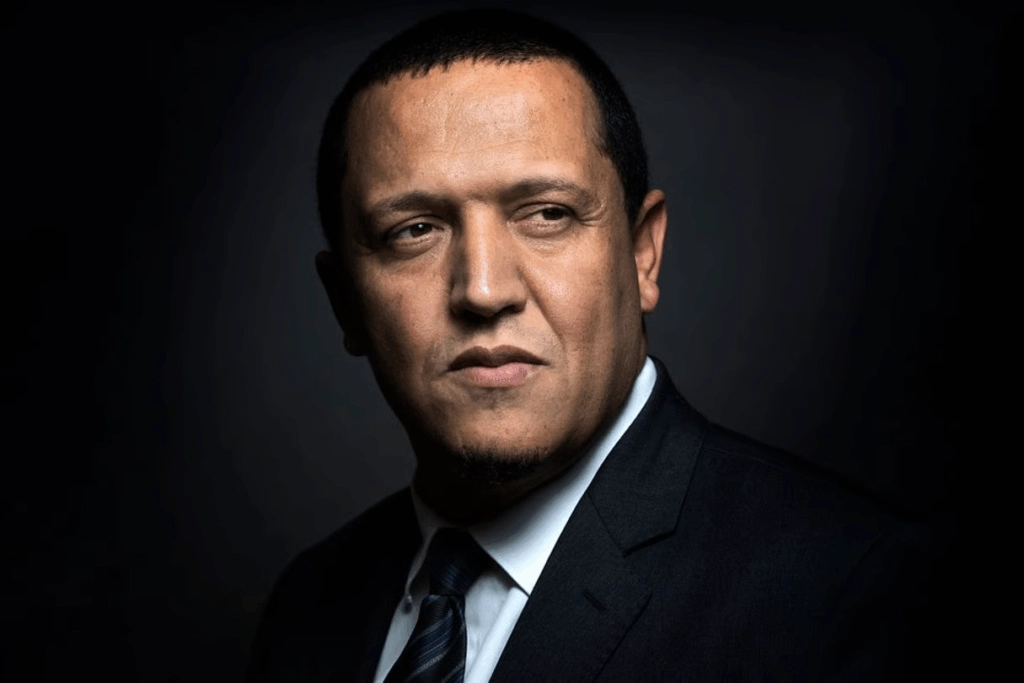
Hassen Chalghoumi, President of the Conference of Imams of France, one of the 30 prestigious contributors to the collective work “Critique of Anti-Semitic Unreason – A Challenge of Civilization, a Fight for Peace” which will be published by Éditions Intervalles (Paris) on November 21, publishes this text critical of the Muslim Brotherhood. Particularly targeted and threatened by the very people he is attacking, Hassan Chalghoumi, a Muslim, and a fortiori imam, stays the course and continues to take a stand against Islamism and for the Republic, even if it means being accused of attacking his own community: he knows that, on the contrary, he is protecting his religion by fighting to give it a positive image in the face of Islamic totalitarianism and its cohort of killers. murderers and fundamentalists. May he be listened to by the Muslims of France.
European organisations demonstrated on Sunday evening in front of the United Nations headquarters in Geneva to protest against what they described as the “penetration of Muslim Brotherhood organisations” into Europe, through what they consider to be humanitarian and political organisations hiding behind the Muslim Brotherhood’s agenda.
The event was attended by organisations such as the European Centre for Peace and Conflict Resolution and the Euro-African Organisation for Humanitarian Action and Development, as well as public figures and influential politicians, calling on the international community and the United Nations to take a firm stand.
The protests began outside the UN building in Geneva despite the rain, with demonstrators holding signs that read: “No to the Muslim Brotherhood in Europe”, “Terrorist organisation under humanitarian cover” and “It’s time for accountability”.
Most of the demonstrators came from several European countries, from France and Germany to Austria and Ireland, indicating that the warning about the influence of the Muslim Brotherhood is no longer a local issue but a European one.
One of the organizers, Ms. Emma Winter of the European Centre for Peace and Conflict Resolution, told the assembly: “We are here today to lift the veil on the organizations that claim to act humanitarianly and are in fact part of a strategic network of the Muslim Brotherhood. It is not just an opinion, but the result of a research and investigation of more than a year.”
She added, pointing to the UN Blue Flag: “We are demonstrating in front of this monument because we ask the international community not to stand by in the face of risks that violate the values of peace and democracy.”
Meanwhile, a youth activist from the Euro-African Organization for Humanitarian Action and Development expressed his anger by saying: “We are not against Islam or believers, but we reject a political organization that acts in the shadows, that exploits benevolence and humanitarian aid to spread its ideology. If we let it happen today, tomorrow we will be powerless witnesses in the face of civil and cultural security.”
The warnings issued in Geneva are not exaggerations: several security reports and investigations have confirmed the existence of façade structures of the Muslim Brotherhood in Europe, operating in civil society, charities, educational institutions and cultural centers, to promote a long-term Islamic political agenda.
For example, a recent French security report indicated that the Muslim Brotherhood is trying to influence French politics through schools, places of worship, and civil organizations, in order to gain progressive ideological influence.
The European Parliament also raised in a written question the need to confront this “ideological infiltration” threatening social cohesion and European values.
The complex structure of the Muslim Brotherhood in Europe is a source of concern. According to an analysis by European experts, the group avoids violence, but builds a secret network that includes cultural, educational and social institutions, using opaque funding to maintain its activities.
In addition, Western security reports warn that several European intelligence services monitor the political activity of the Muslim Brotherhood as a potential threat, although affiliated organizations often present themselves as moderate social groups.
Several European cities have also been the scene of similar protests calling for the Muslim Brotherhood to be classified as a terrorist organization.
In Austria and Ireland, pressure on governments to adopt legal measures is intensifying to counter the influence of the Muslim Brotherhood, which some countries see as a threat to European values.
At the same time, European media have reported that the European Union is seriously considering strengthening the monitoring of external funding of organizations suspected of being linked to the Muslim Brotherhood and establishing specific checklists.
According to protesters in Geneva, the infiltration of the Muslim Brotherhood is not only a political activity, but a long-term structural threat:
1. Thoughtful ideology: they claim that the Muslim Brotherhood has a planned strategy to spread in Europe through civil and religious organizations, not only through proselytizing campaigns but also through education and social services.
2. Opaque funding: Some Muslim Brotherhood organisations are accused of using non-transparent funding to strengthen their influence within the European Communities without fully revealing their sources.
3. Doublespeak: Many reports refer to what they call “doublespeak” – the group openly presents itself as tolerant and acceptable to the European authorities, but implements its agenda more strictly within its circles of faithful.
4. Weak legal response: Protesters believe that some European countries have yet to adopt strong policies to counter what they call nonviolent political Islam, allowing these organizations to grow under civilian legal cover.
Some European politicians who participated in the demonstration called on the UN to send a clear warning to the governments of the European Union and to:
• Conduct an independent international investigation into the funding of Muslim Brotherhood organizations in Europe.
• Impose more transparency on organisations receiving funding from countries outside the EU, especially if they are linked to established political movements.
• support initiatives to strengthen citizenship and social cohesion to prevent parallel forms of influence that can weaken European democratic values.
Some protesters also called for a “blacklist of Muslim Brotherhood organizations” monitored internationally and the development of security coordination mechanisms between European countries for the exchange of intelligence information on these organizations.
The warning of the protesters in Geneva reflects deep concerns: not only about the immediate influence of the Muslim Brotherhood, but also about the construction of a parallel ideological and social structure in Europe that could transform some communities from within, under the guise of peace and development. If European countries do not act firmly, these activists believe that the continent could face long-term structural dangers, not only security but also cultural.