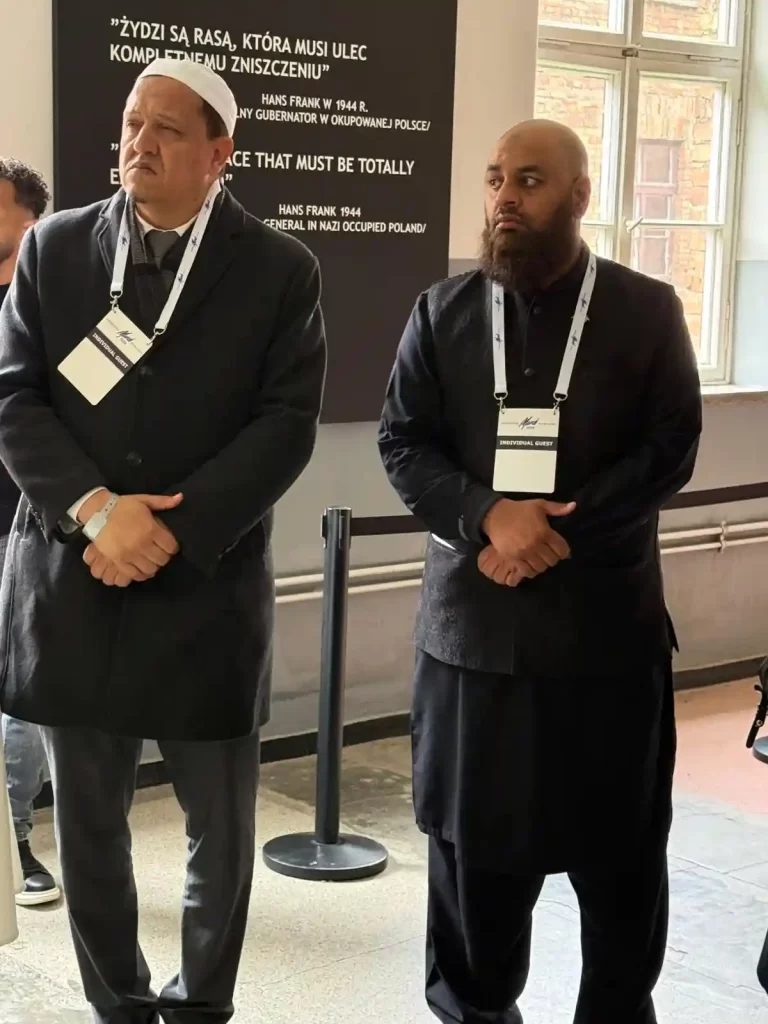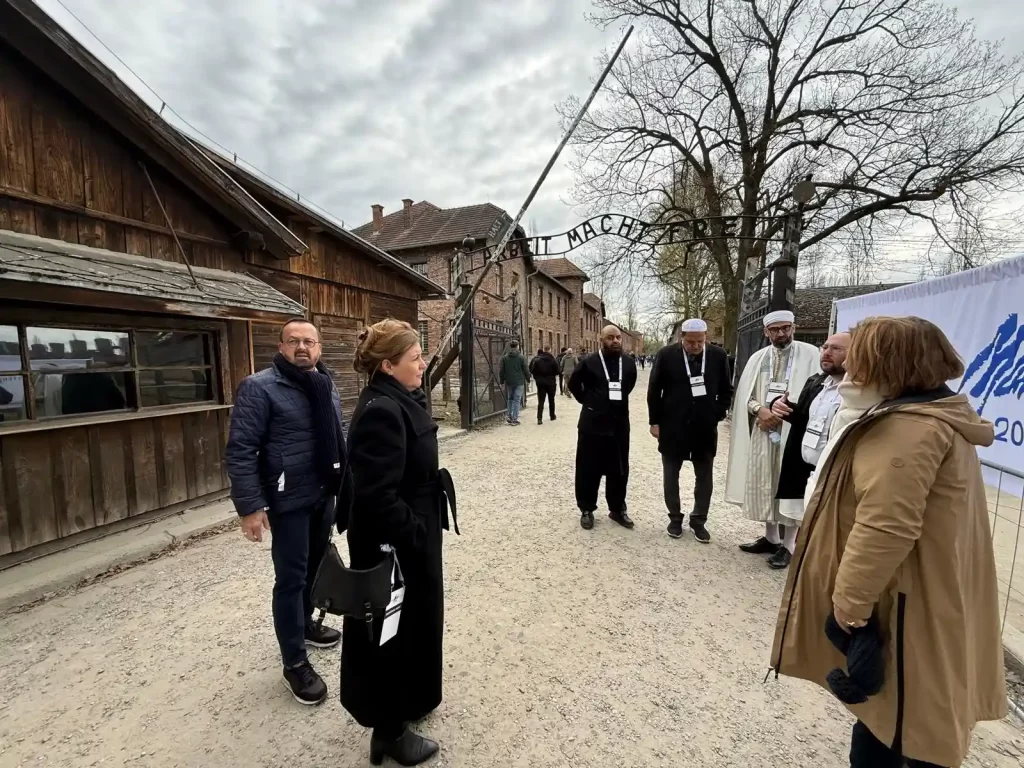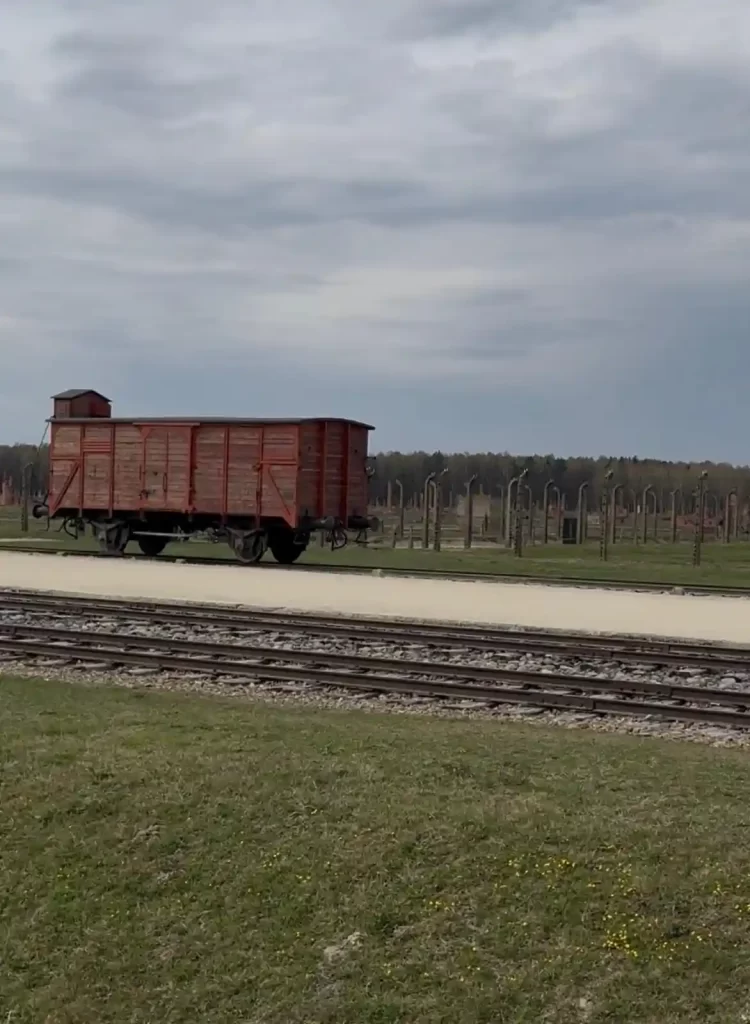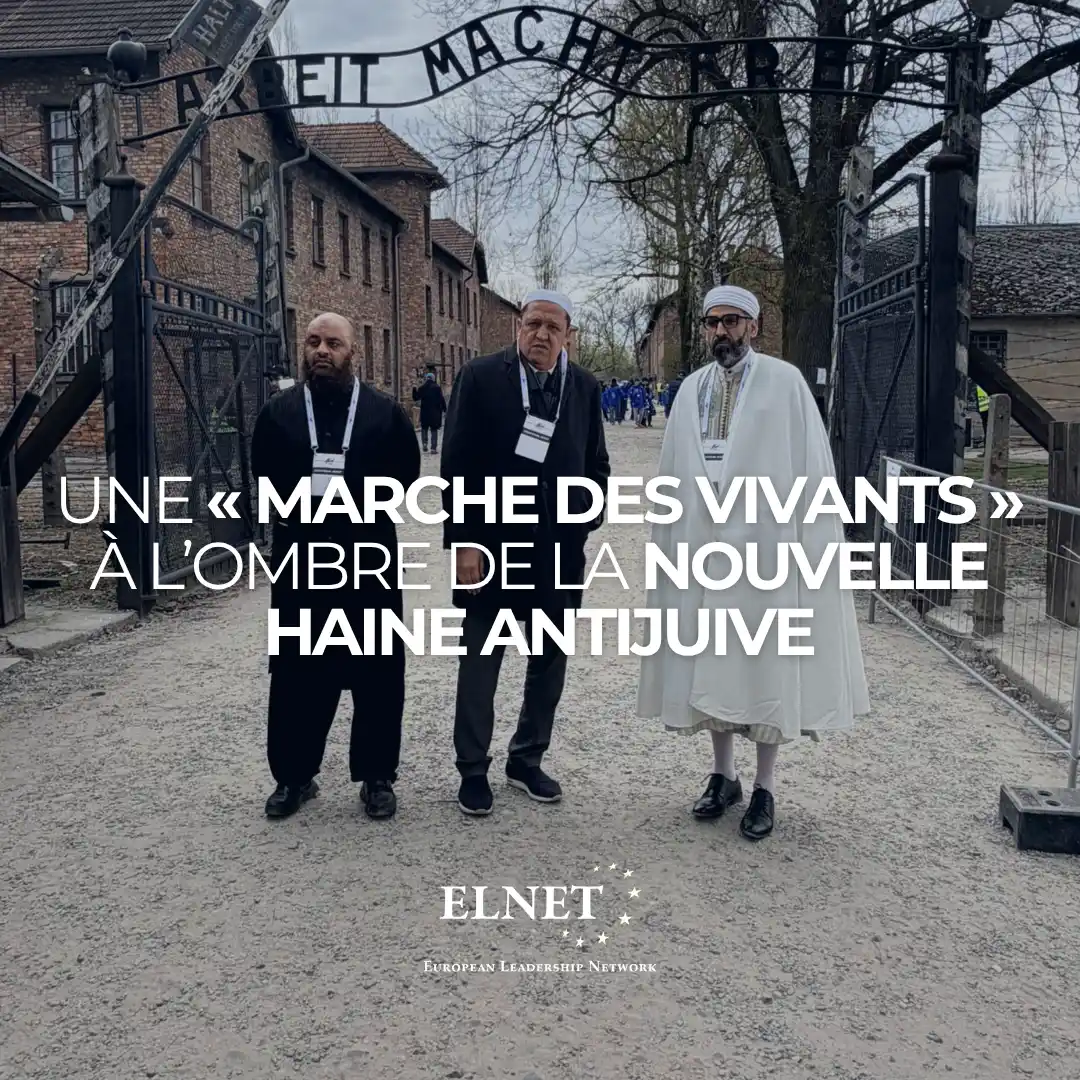
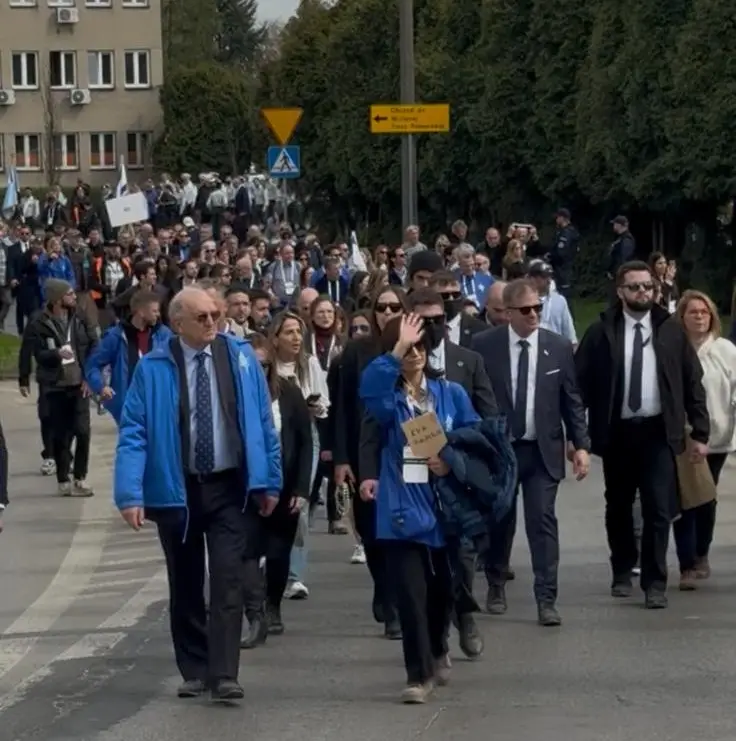
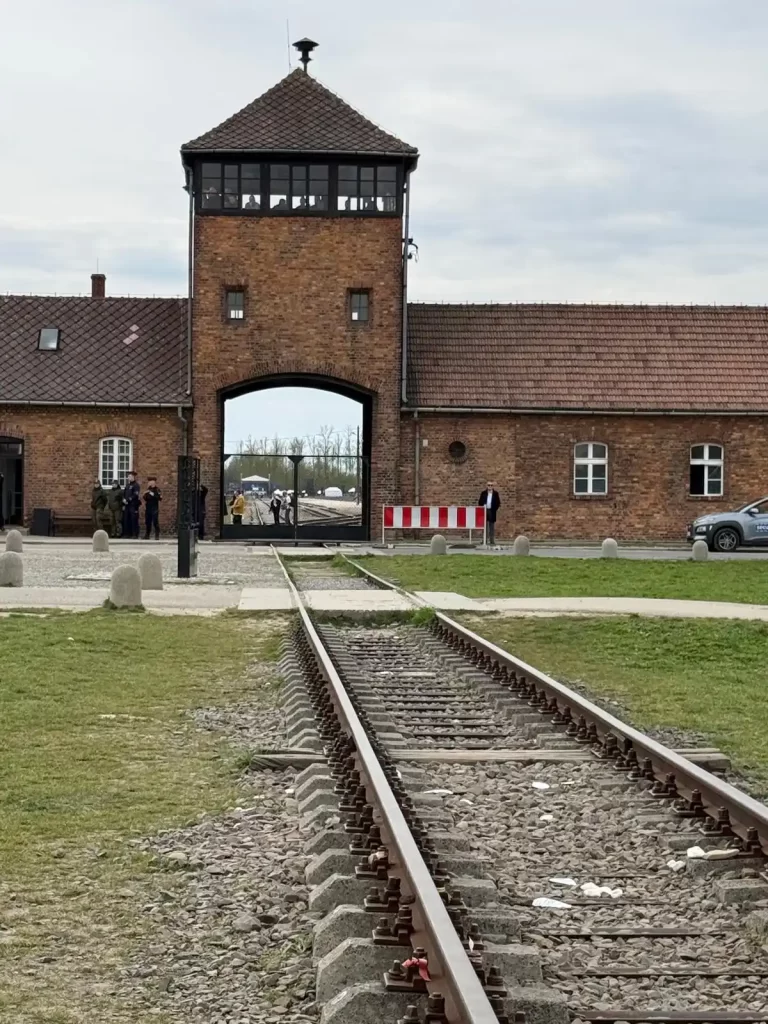
Between Auschwitz and Birkenau, the sky has the cold color of steel. The slightest ray of sunshine seems incongruous. Here, the silence of the tortured is deafening. He brutally seizes the cohort of thousands of “Living” who are progressing, with a heavy step, this Tuesday, April 14, 2026, between the two factories of death. On the faces, the same expression of absolute incredulity. Everyone tries to imagine the unimaginable, to think the unthinkable. How did they walk in the freezing cold? How could they stand without water, without food? How did they resist the blows of the SS’s rifle butts? How…? How…?
And above all, why? Hier ist kein warum… (Here, there is no why), replies Primo Levi in If It’s a Man.
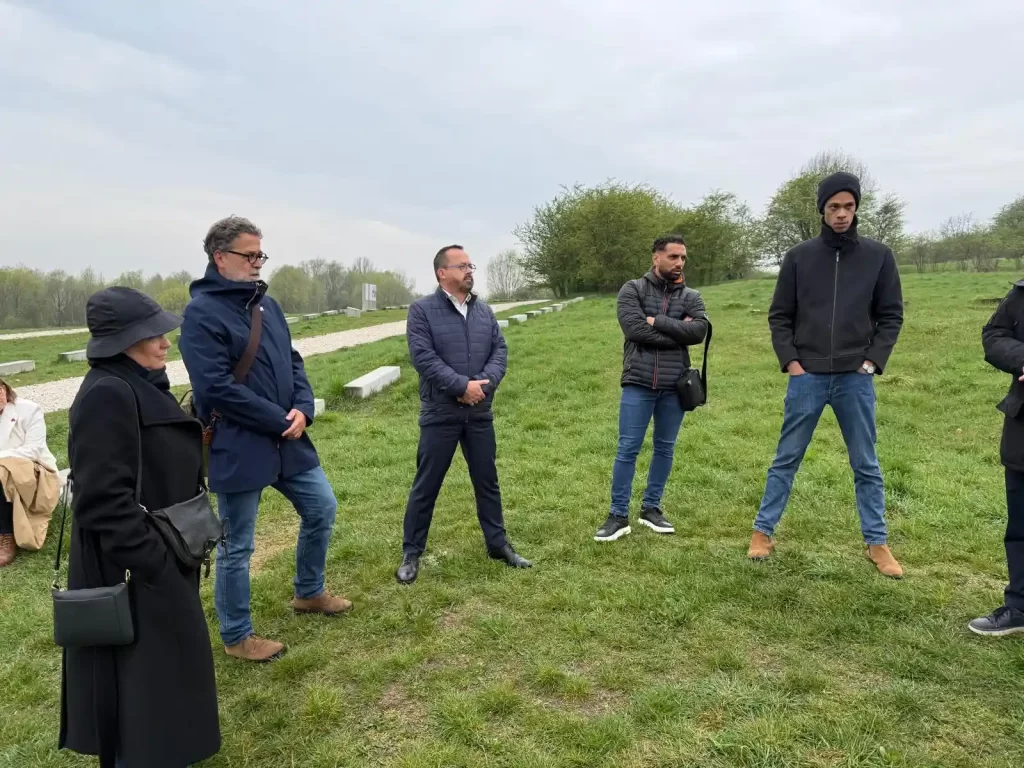
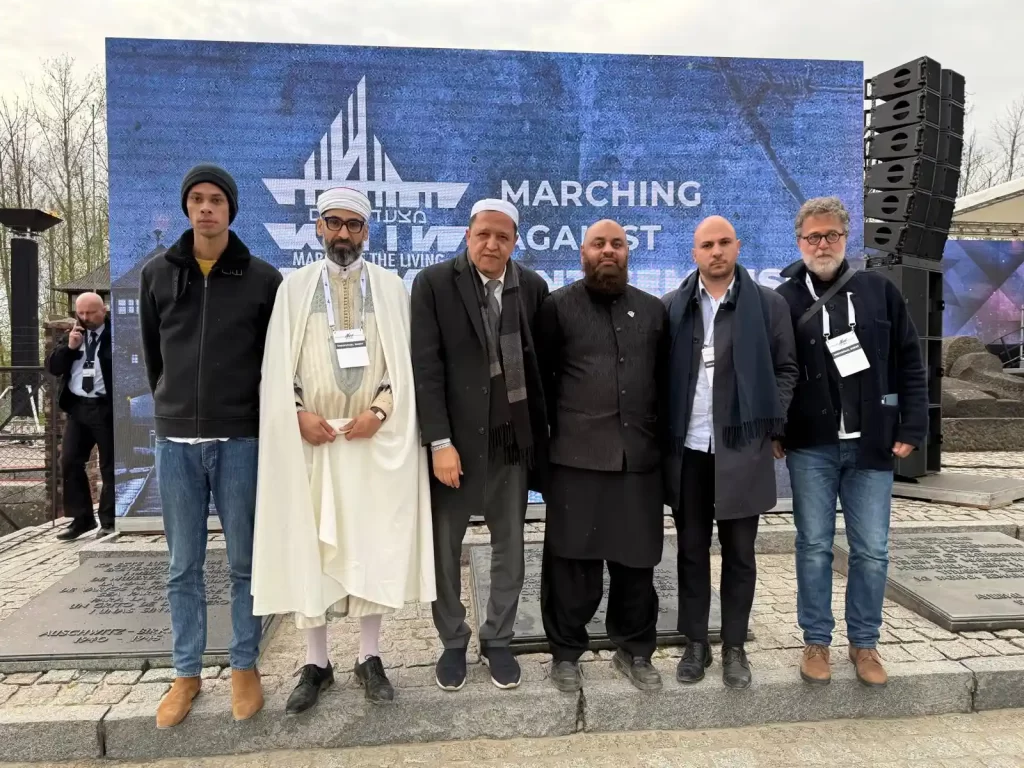
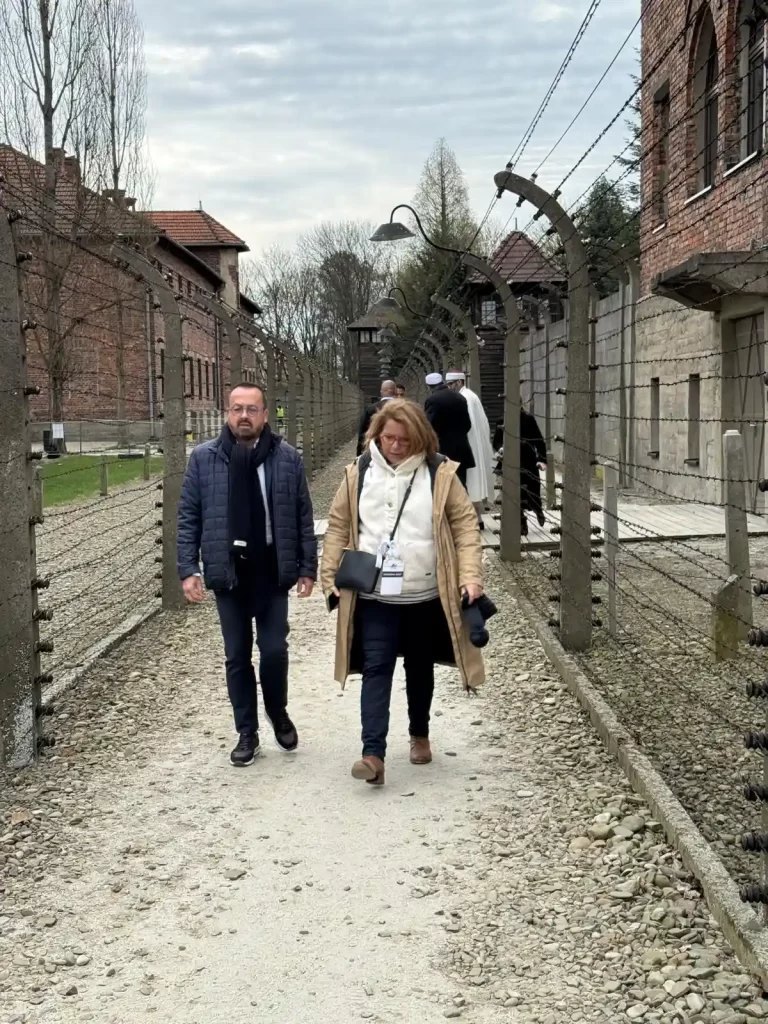
In the nightmare enclosure, between the barracks, along the barbed wire, observing the chimneys of the crematoria, these questions are in the minds of all the participants in the 2026 edition of the March of the Living. And the same goes for the members of the delegation of parliamentarians, Muslim dignitaries and influencers, formed this year by ELNET France on the occasion of Yom ha-Shoa ve ha-Gvoura, the day of remembrance of the Jewish genocide and resistance.
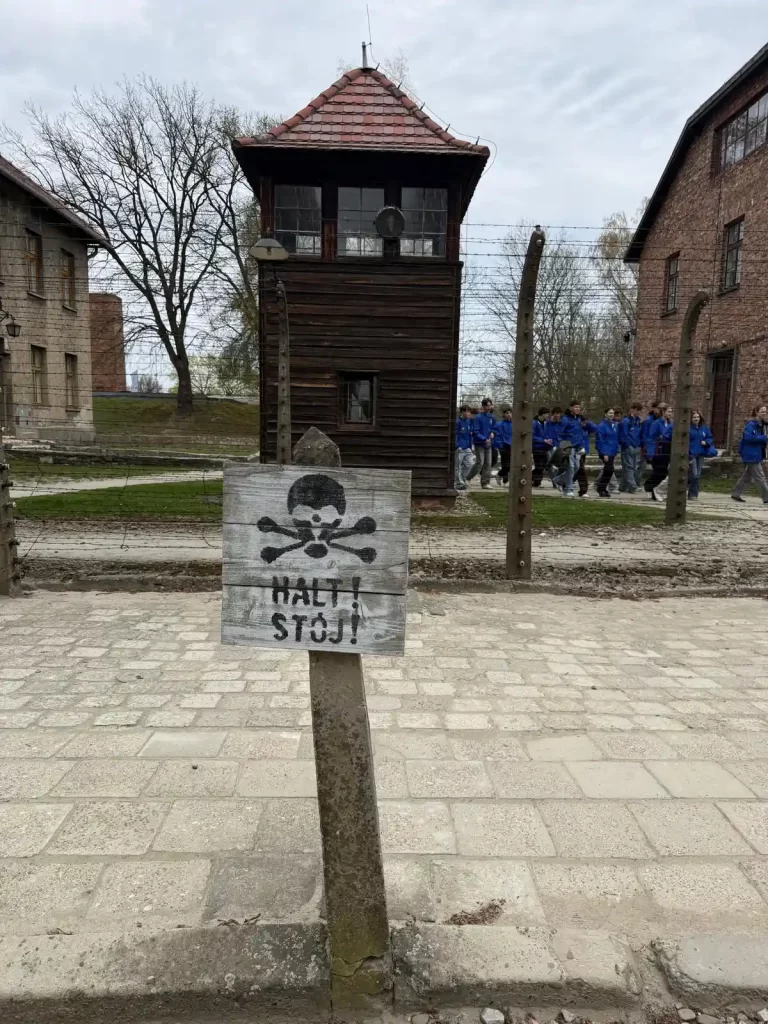
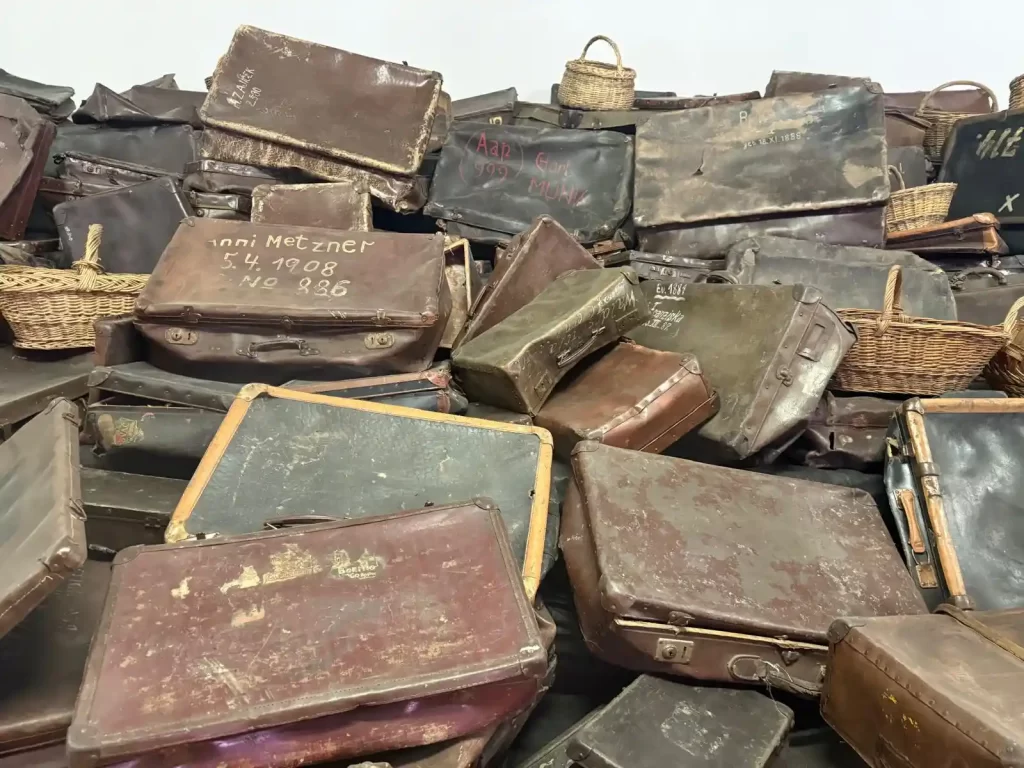
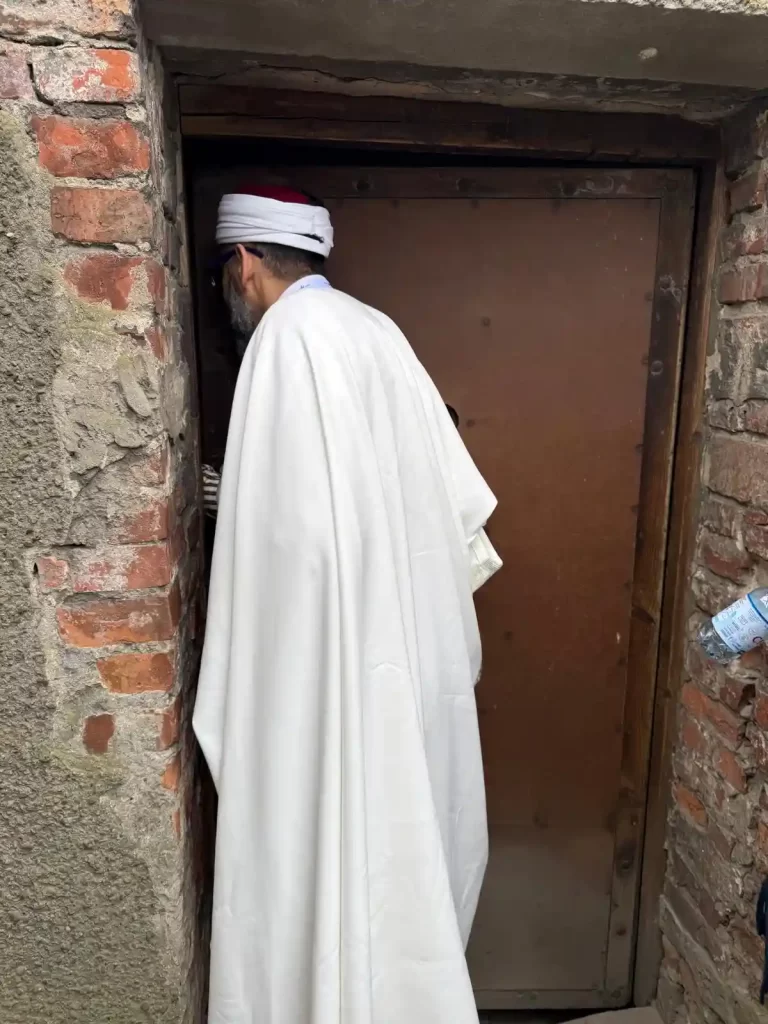
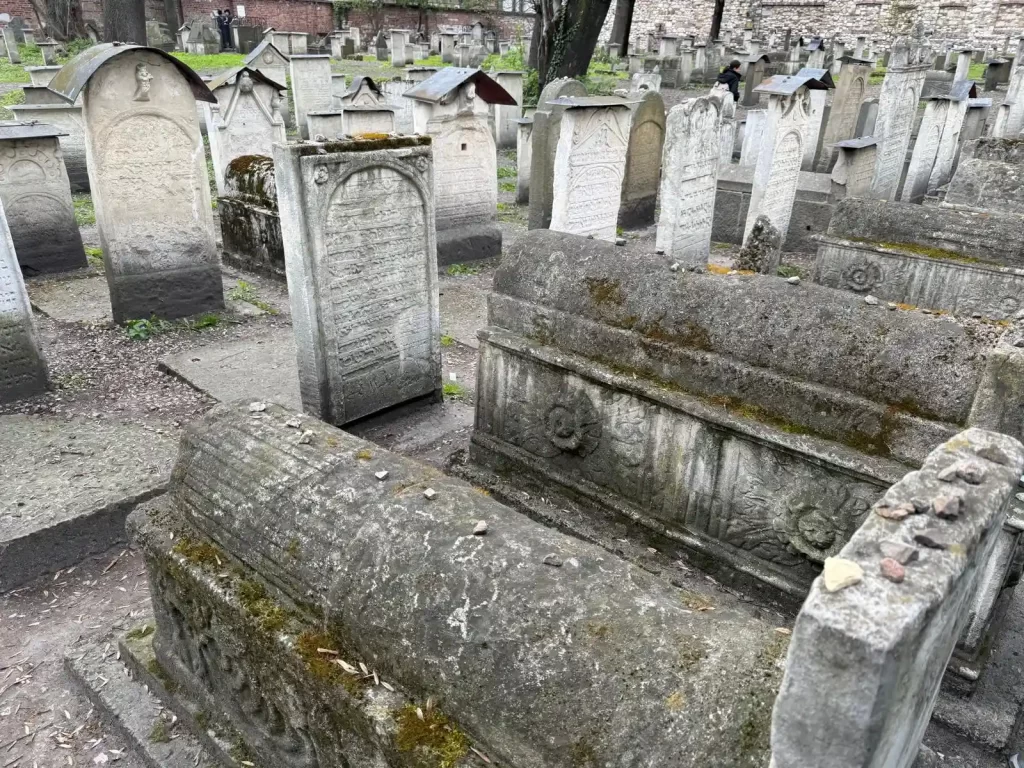
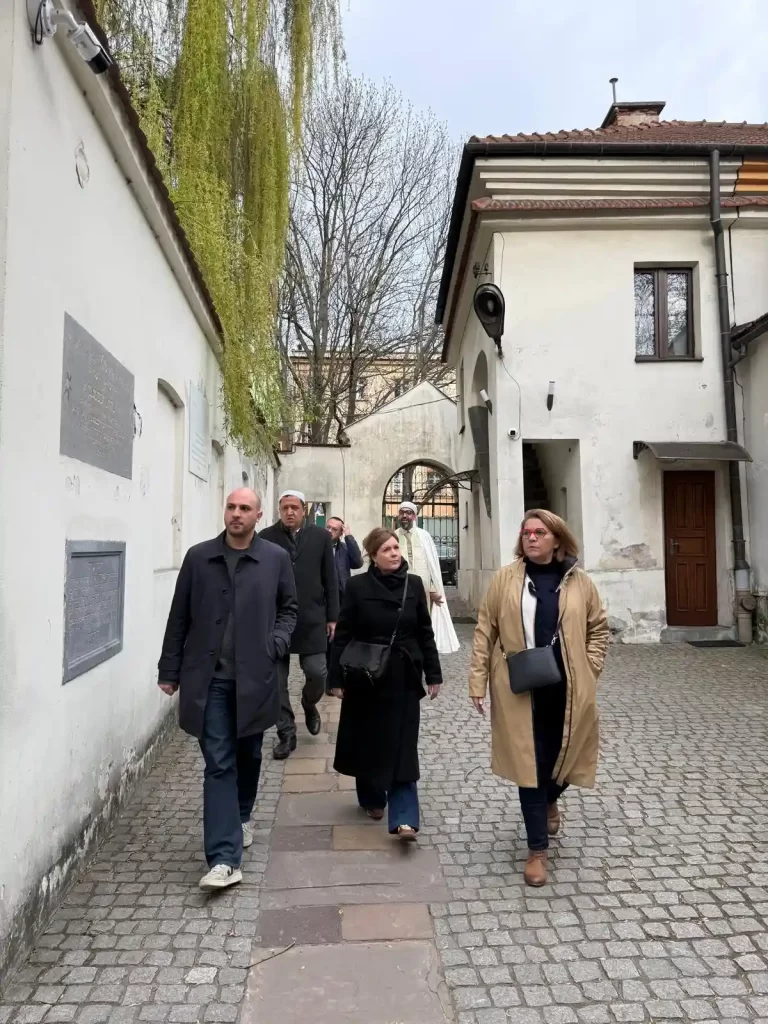
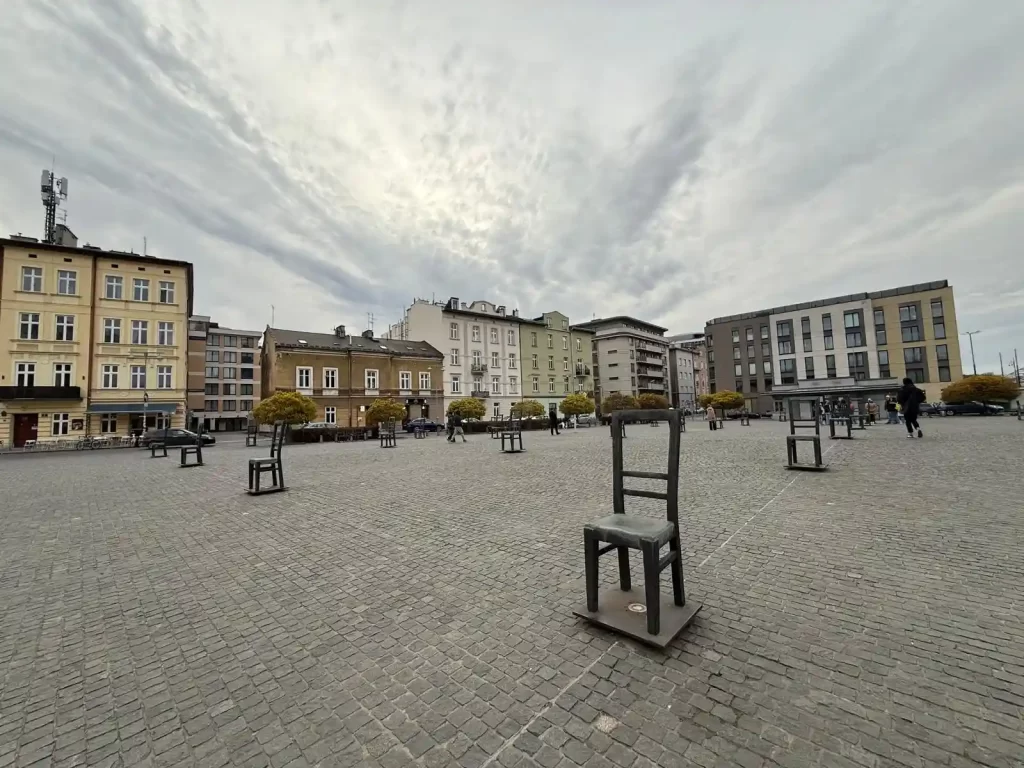
They come from Paris, Perpignan, Quimper, Grenoble, Birmingham. Some are from Pakistan or Tunisia. All of them are pierced by the shock wave of this cursed place that shakes their certainties in a context of renewed anti-Jewish hatred stirred up by Islamism and the extreme left, especially in Western Europe. The day before, they walked in amazement through the cobbled streets of the former Krakow ghetto, the last synagogue of the former ghetto still in use and the Jewish cemetery ransacked by the Nazis where the tomb of Moshe Isserles (16th century), an eminent rabbi, Talmudist and philosopher, known for his work on Jewish daily practice, still stands.
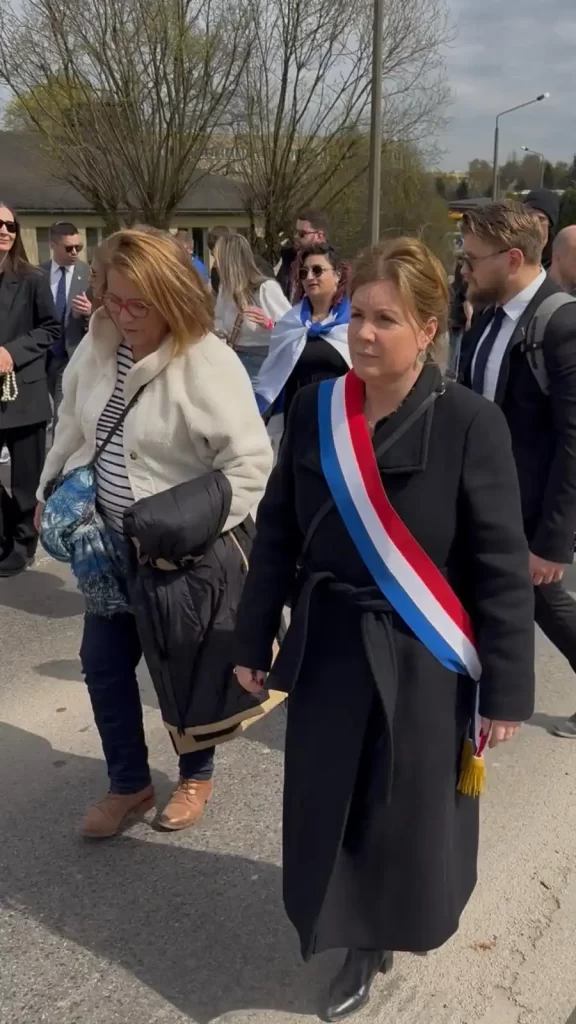
For one of the members of the ELNET delegation, Anaïg Le Meur, a Breton elected official (Renaissance), the important thing is to immerse yourself in the place. In her lands where “the Republic, language and culture take precedence over religion”, it is precisely the need to “understand” that has led her here. She carefully observes the remains of the camp, searches for her words, but fears that she will not find the right ones in the face of the abyss. “I’m learning to share my emotion,” she tells us.
She is not the only one. His colleague Yannick Neuder (Les Républicains), former Minister of Health and elected representative of Isère, comes up against the same invisible wall. He recently visited Israel. He also visited the Caen memorial and says he knows history. But in Poland, rationality does not apply. “The why remains unanswered,” he admits, in the face of this mechanism of “demolition of the human”. “How is a head of state who comes to power after being elected driven to such acts… It’s incomprehensible,” he murmurs.
“There is a need to come here, to feel things on the ground,” explains MP Anne-Sophie Ronceret (Renaissance), who is deputising for Aurore Bergé, with whom she works on the issues of anti-Semitism. “You have to live this experience that goes far beyond the framework of the history books. This reinforces my desire to continue the fight, and to be very present in the National Assembly on these subjects and well beyond,” she adds, stressing “even if there is only one Jewish community in my constituency” of Yvelines.
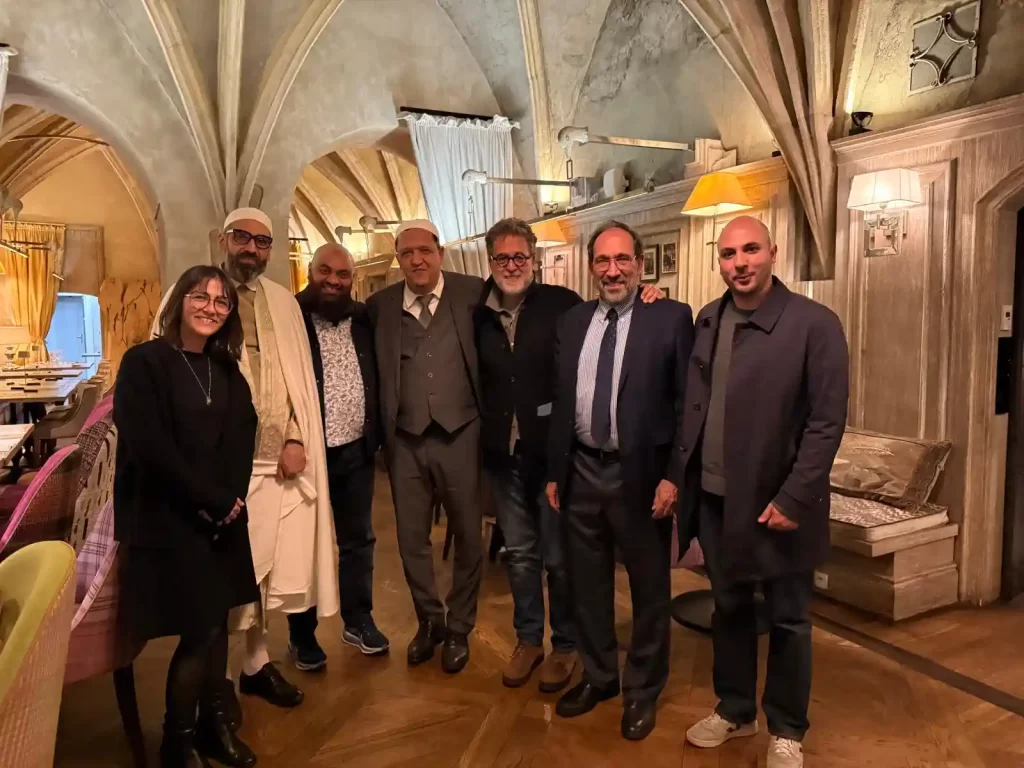
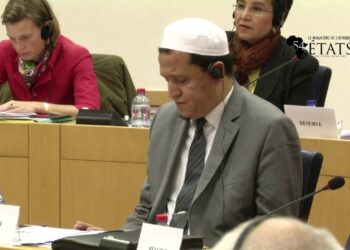
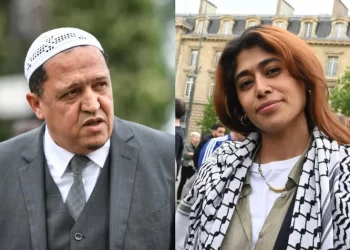
Flanked by his friend and accomplice Aymen Hosni, of Tunisian origin like him, Imam Hassan Chalghoumi “walks” for the ninth time with “the Living”. From the height of his ninety meters, he travels every corner of this geography of evil. Despite the daily insults, despite the death threats, he persists without ever bowing down. His dream, even if he cannot hide his pessimism for France and for Europe? “To see, one day, a hundred thousand Muslims marching like him to Auschwitz to say: never again.”
At Auschwitz-Birkenau, the imam met other Muslims from the Gulf, such as Imam Tawidi, the “Imam of Peace”, from Morocco, such as Pink Tarbouche, who had also come to march. The hugs are spontaneous, warm. Many wear their traditional outfits and headdresses, whose bright colors contrast with the grim landscape. Driven by their curiosity, the “walkers” hastened to shake their hands effusively and congratulate them on their commitment and courage.
“I am doing everything I can to explain what happened here. But the problem today is that if I appear next to a rabbi, I only receive insults, whereas if I am photographed with the pope, everyone applauds. Today, this is the problem of the Arab world,” laments Hassan Chalghoumi. This does not prevent him from rejoicing at being invited to Indonesia and making “new friends in the Gulf, Morocco, Sudan” despite the incessant death threats. The liberation of the Muslim world will pass, he says, through the extinction of the hatred cultivated by “fanatical regimes”, in particular the Islamic Republic of Iran, which he hopes will fall.
Between the barbed wire, Noor Dahri — a repentant jihadist who once trained in Kandahar and fled Pakistan to Britain — manages to rekindle a glimmer of hope because, he says, “thousands of Muslims are beginning to hear my message around the world.”
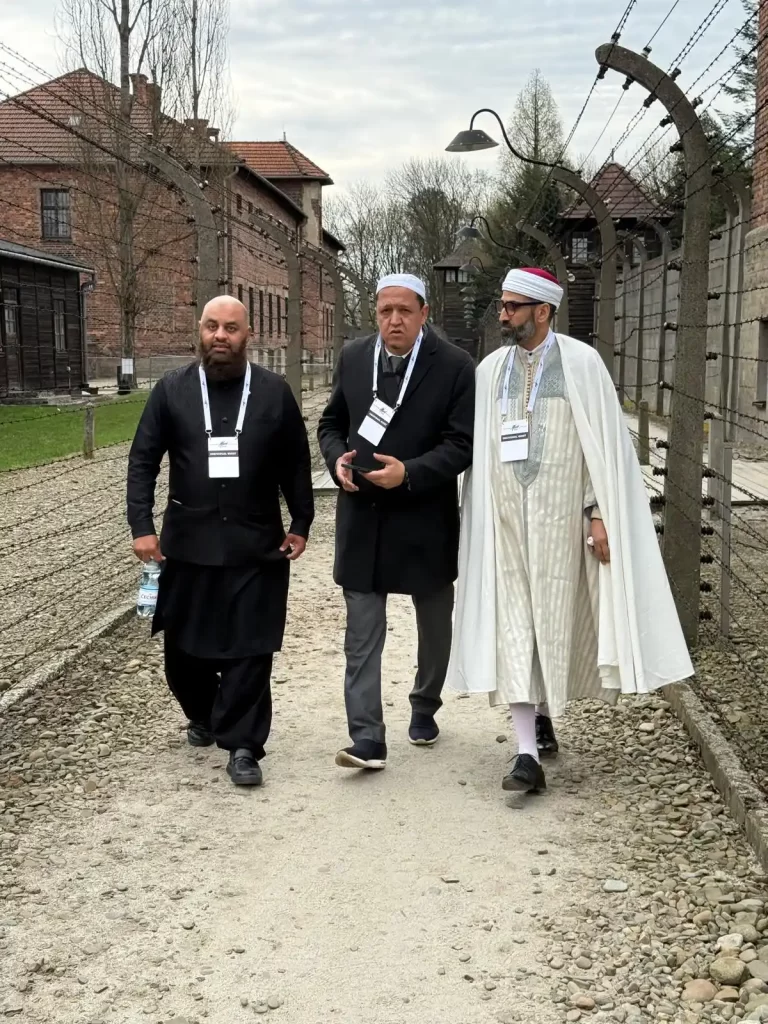
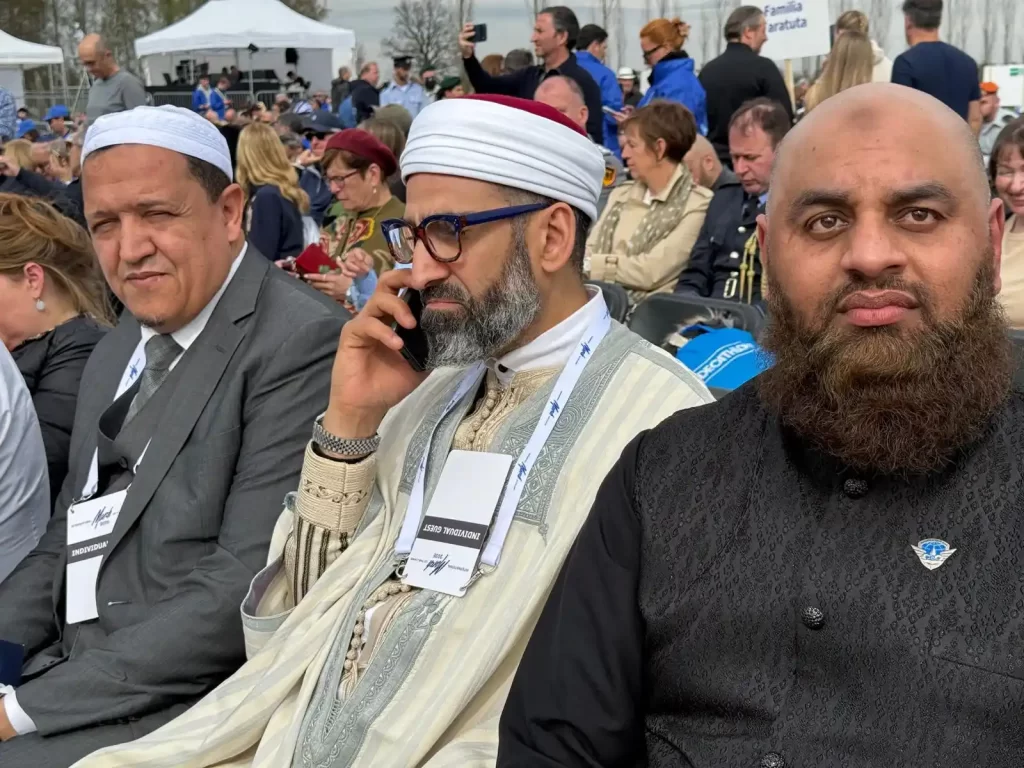
“As a Muslim, it is my duty to call my community to come here. We must bring our children, our elders, our wives. They need to see what has been done in this place because racism is a mental illness. Here, it is humanity that has been murdered. So, the answer is: visit Israel, talk to Israelis, meet survivors while they are still alive, see the number tattooed on their arm, learn about history in order to change the perception of Muslims. »
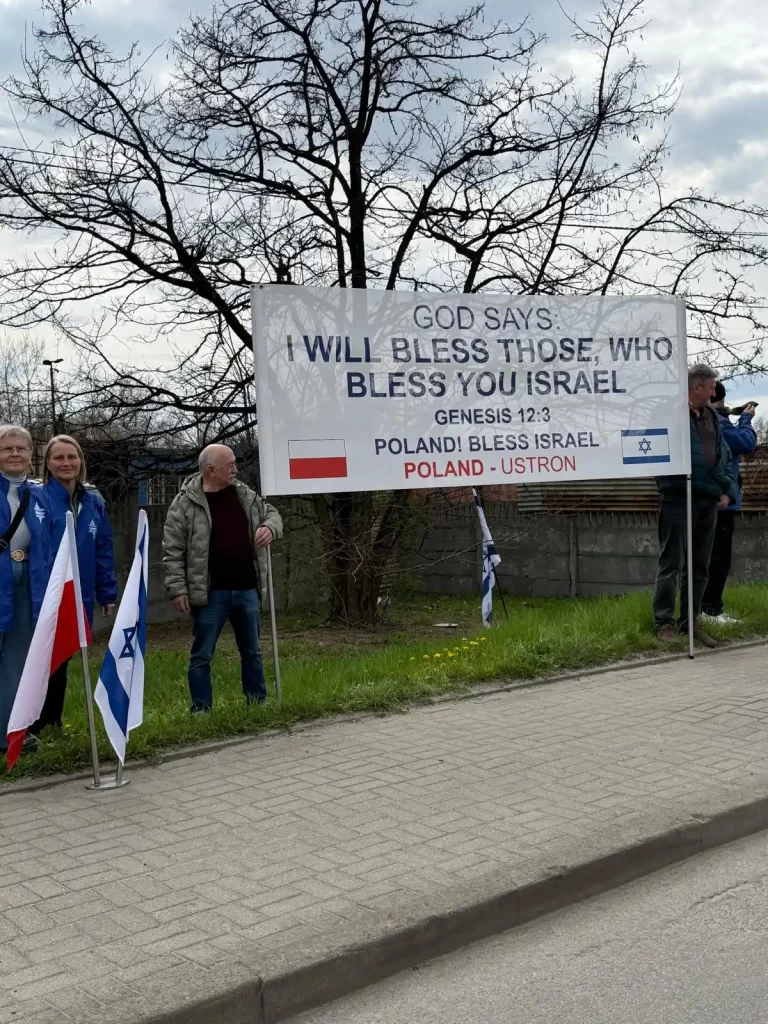
The delegation advances on the railway tracks that lead to Birkenau. An image upsets Anne Testuz, a communicator who defines herself, among other things, as “Catholic”: a multitude of flags of Israel stamped with the Star of David fly above these railway tracks that led straight to death. She meets survivors, but also contemporary faces of ancient pain, Hamas hostages recently freed from another hell: Gaza. For her, the “duty of memory” must give way to the “duty to know”. Knowledge in order not to be fooled, knowledge to counter the refusal of certain media to face reality.
Ben le Patriote, an influencer but also a committed and courageous firefighter, insists on the urgency of “coming together”. “We must take other Muslims with us. We have to talk to them. We must bring together, here in Auschwitz, Jews, Christians and Muslims,” because this is the only bulwark against the return of anti-Jewish hatred.
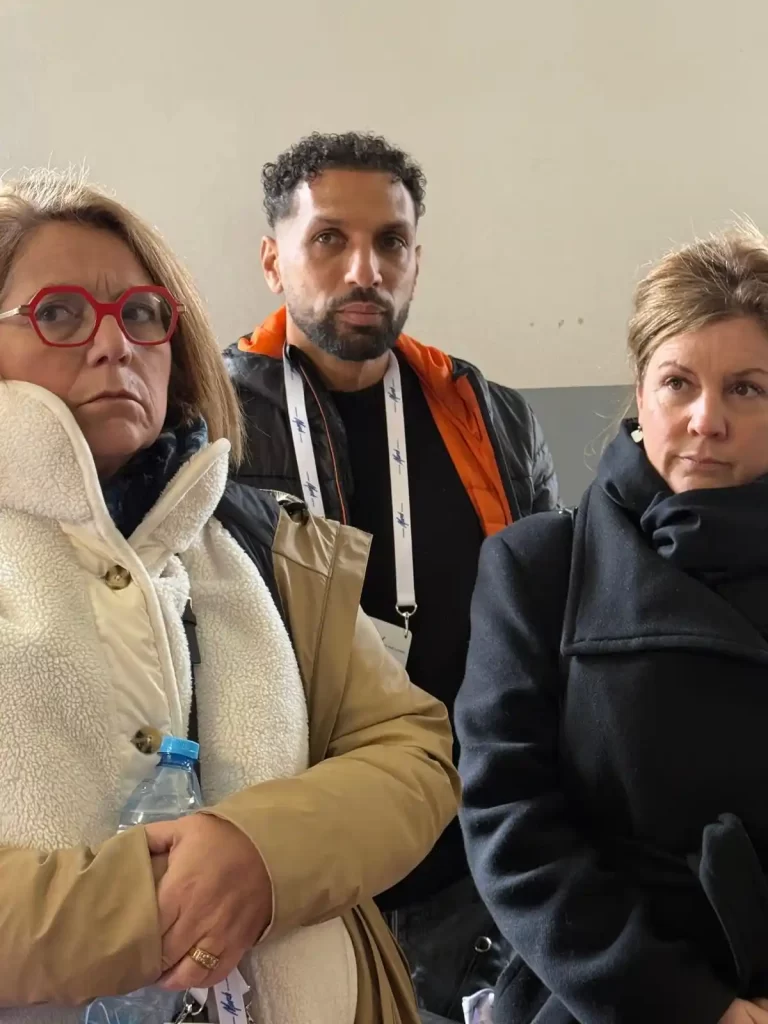
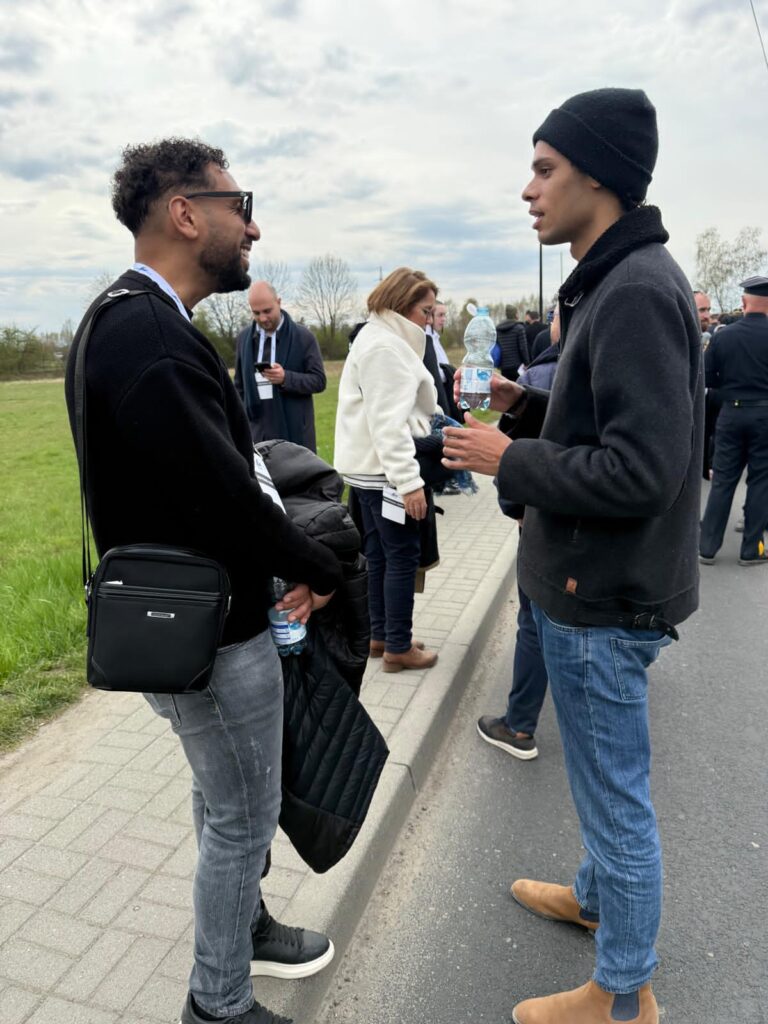
As the march draws to a close, Lucas Moulard, an active and determined columnist and influencer who has just returned from a long trip to Israel for the filming of a documentary after October 7, 2023, expresses the anguish of transmission because, soon, the direct words of witnesses will disappear. “There are too few of us as non-Jews to get the message across. Soon, it will be only the descendants and us. It will be more difficult to be heard,” he fears. But his presence here, like that of this motley delegation of police officers, sheriffs and citizens of the world, gives hope for the opposite.
The day ends with traditional Jewish prayers and the lighting of 7 torches of remembrance, in a striking contrast between a past of ashes and a future that everyone wants to be promising: in the middle of the chimneys of crematoria, the last symbols of a process of industrial death, thousands of young people and adults wrapped in large flags of Israel sing and hold hands.
The ELNET delegation leaves the camp, still without an answer but reinvigorated by a new energy drawn from the stories of the last survivors who hammer home their pride in being “alive” while the Nazis have been wiped off the face of the globe and their confidence in their descendants: the multitude of their great-grandchildren.
As if to confirm this feeling, a final meeting at the Krakow Community Centre with its director, Jonathan Ornstein, allowed our delegation to see the renewal of the community of Polish Jews, 90% of which had been decimated during the war.
“This is the paradox we are experiencing,” explains Jonathan Ornstein, “because in this country where three million Jewish citizens have been gassed, more and more of their descendants are returning because they feel safer than in other countries in Europe where anti-Jewish hatred is increasing in intensity.”
At Auschwitz-Birkenau, the turf, the few shoots of which were devoured by the starving deportees, covered the entire plain, a shining symbol of the historical resilience of the Jewish people.